Anonymized proof for buyers who want to see how the work actually shows up.
These case studies are intentionally anonymized, but they are built from real workflow patterns, real implementation work, and real operational outcomes. They are designed to be specific enough to be useful without exposing client identities protected by NDAs.
Publishing Model
Specific enough to be useful. Generalized enough to stay safe.
Anonymized case studies built around real operational patterns.
Established regional service business
Client onboarding handoff without duplicate entry
A growing service business needed to stop rebuilding the same client information across sales, operations, and billing just to keep onboarding from breaking.
Problem
Once a new client was approved, staff had to export details from one system, re-enter them into an operations workflow, and then rebuild key information again for billing. The process was reliable only because experienced employees knew how to keep the handoff from breaking.
Constraint
The systems involved did not share one dependable source record, so experienced employees were bridging the gaps manually.
Intervention
OfficeWeave mapped the handoff in detail, built a validation and integration layer, and synchronized downstream records from one approved source.
Operational result
New-client handoffs became cleaner, faster, and less dependent on duplicate entry.
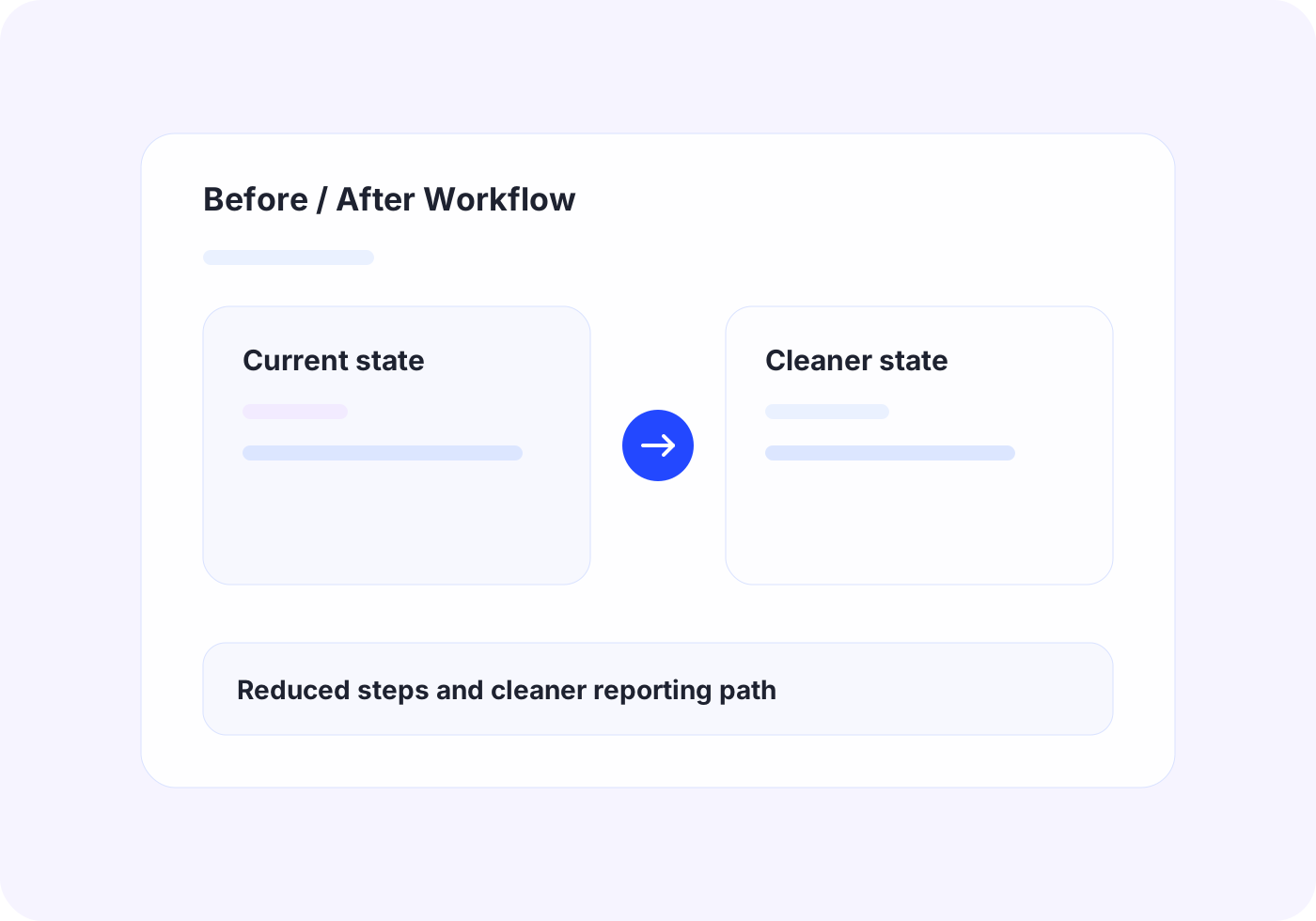
Representative workflow pattern only. Client names, system specifics, and identifying details are intentionally generalized.
Read case studyBefore / After
6 steps removedCurrent state
9
manual steps
After rework
3
cleaner steps
The onboarding handoff became a cleaner shared workflow instead of a fragile sequence of duplicate entry steps.
Workflow stages
3 key moves
Approved client records were captured from the sales source once the deal cleared the required checkpoint.
OfficeWeave validated the record, transformed the data structure, and routed the right details into the next operational systems.
Billing and delivery teams received the same synchronized record instead of rebuilding the handoff by hand.
Before / After
6 steps removedCurrent state
10
manual steps
After rework
4
cleaner steps
Document-heavy operations team
Document intake automation for a portal-heavy workflow
Problem
A document-heavy team was spending too much time reading files, extracting values, and repeating the same portal updates record by record.
Operational result
The team handled more document-driven work with less manual reading, copying, and portal repetition.
6 fewer hand-built steps
Read case studyBefore / After
4 steps removedCurrent state
7
manual steps
After rework
3
cleaner steps
Knowledge-heavy operations team
Secure internal knowledge access without casual AI exposure
Problem
A growing team wanted AI support for internal process work but needed a safer alternative to fragmented, ungoverned public-tool usage.
Operational result
The business gained controlled AI support for internal process work without normalizing risky ad hoc usage.
4 fewer hand-built steps
Read case studyBefore / After
5 steps removedCurrent state
8
manual steps
After rework
3
cleaner steps
Operations-heavy service team
Internal ops dashboard replacing spreadsheet handoffs
Problem
A team needed one focused internal workspace instead of bouncing between multiple apps, trackers, and spreadsheets to complete routine operational work.
Operational result
Routine work moved through one cleaner operating surface instead of a patchwork of tools and trackers.
5 fewer hand-built steps
Read case studyNext Step
If this looks close to the kind of operational drag your team is dealing with, the right next step is usually paid discovery. That lets OfficeWeave review the workflow in detail and recommend the cleanest implementation path.
Starting engagement
$2,500
Discovery is credited toward implementation when the project moves forward.
Book a Strategy Call